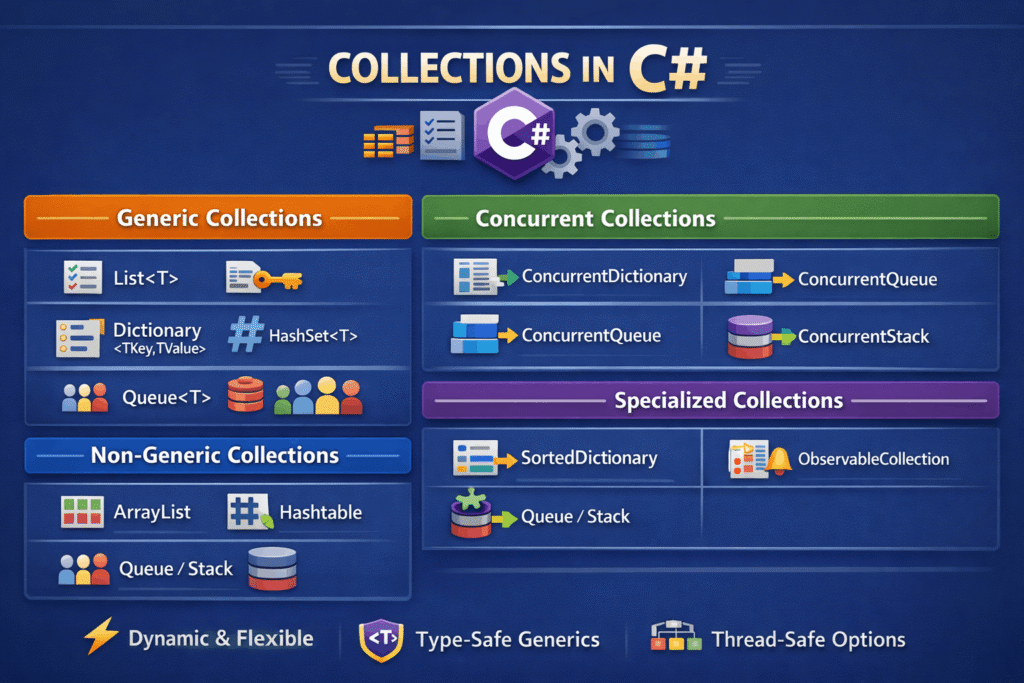
In C#, collections are used to store, manage, and manipulate groups of related objects. Instead of working with fixed-size arrays, collections provide flexibility, type safety, and powerful operations such as…
Developers come across the scenario of switching between multiple versions of interpreters, simply because the project they work on requires different interpreter versions and also different bunch of libraries. In…
A database is an organized collection of related data stored electronically so it can be easily accessed, managed, and updated. Databases are designed to handle large amounts of information efficiently…
Azure provides a full spectrum of cloud services, categorized by management control: IaaS (Infrastructure as a Service) - VMs, VNet, Blob Storage, Azure Disk Storage - Tenant manages infrastructure that…
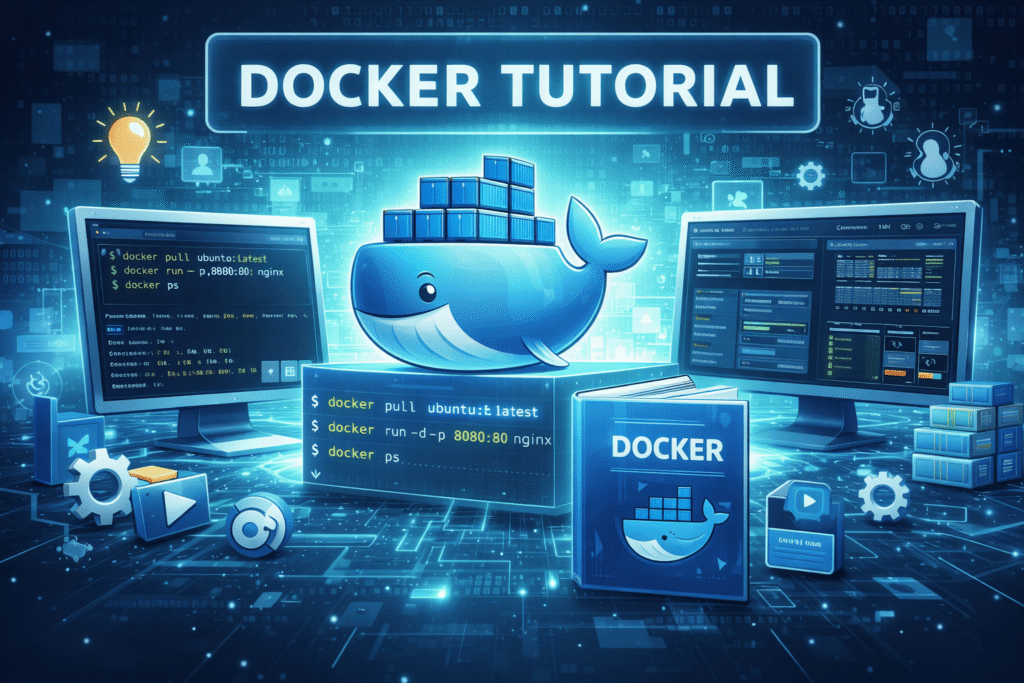
Docker is a platform that allows you to package applications and their dependencies into containers.Containers run consistently across environments—your laptop, CI pipelines, and production servers. Why Docker Matters “Works on…
Linux is a free, open-source operating system that manages a computer’s hardware and lets you run applications—similar in purpose to Windows or macOS. Linux is the software layer that: Provides…
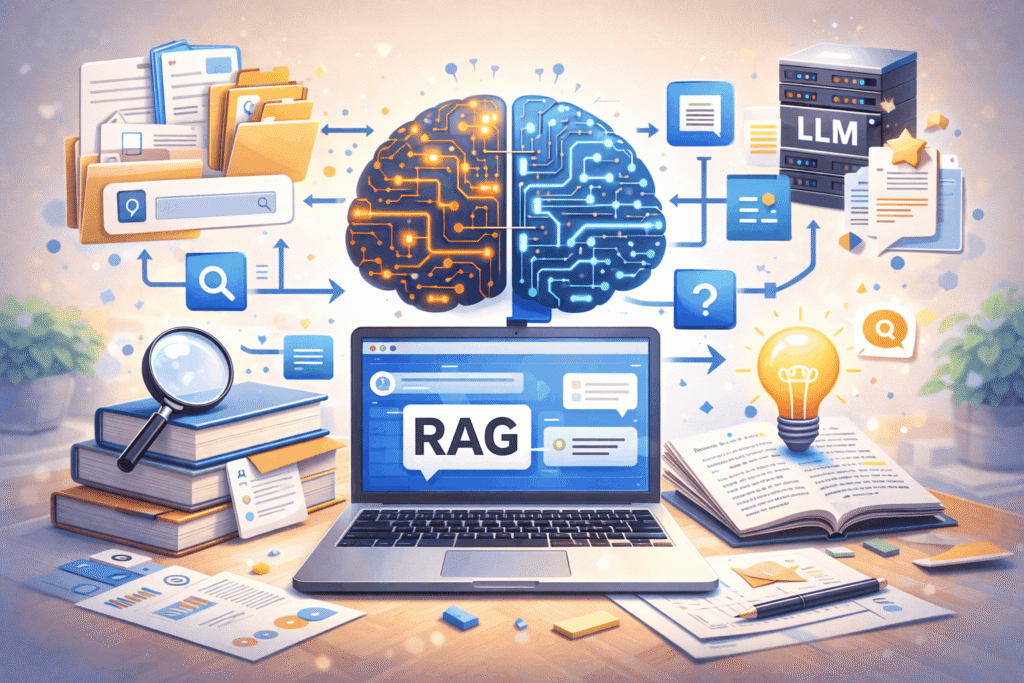
Overview Retrieval-Augmented Generation (RAG) has become the dominant architectural pattern for grounding Large Language Models (LLMs) in proprietary or domain-specific knowledge. Instead of relying solely on model weights, RAG combines…
Below is a list of popular ORMs in python: SQLAlchemy ORM (most powerful & flexible) Best for:Large systems, microservices, complex queries, performance-critical apps Why it’s popular Industry standard outside Django…
What is SQLAlchemy? SQLAlchemy is Python’s most popular database toolkit. It has two big layers: SQLAlchemy Core: build SQL expressions and run them (closer to SQL). SQLAlchemy ORM: map Python…